Fort Lauderdale, along the New River
The History of Fort Lauderdale
Before the beach resorts and canal-front homes, this was an Indigenous landscape connected by water. The New River later carried military expeditions, Seminole trade and the business of a growing settlement. Railroads, hurricanes, a deepwater port, naval aviation and a famous spring break film each changed the city. Riverwalk and Las Olas offer a way to read those layers today.
Quick facts
- Before the city
- Tequesta homelands
- Indigenous communities lived along South Florida's rivers and coast long before European colonization. The New River was part of that inhabited landscape.
- The name
- Major William Lauderdale
- The city's name comes from Second Seminole War fortifications first established in 1838 and named for the Tennessee officer.
- Early commerce
- Trading post, 1893
- Frank Stranahan arrived to operate a ferry and stage-line camp on the New River, then developed a trading business with Seminole customers.
- Incorporated
- March 27, 1911
- Fort Lauderdale became a municipality before Broward County was created in 1915. It became the new county's seat.
- Working waterfront
- Port Everglades, 1928
- The harbor was dedicated in 1928. Cargo, fuel shipments and passenger travel made the port a major part of the regional economy.
- The water city
- Venice of America
- The nickname reflects a landscape of rivers, canals and the Intracoastal Waterway, with waterfront neighborhoods and an extensive marine industry.
Nine chapters in Fort Lauderdale's history
Before European colonization
Tequesta country along the New River
Fort Lauderdale's history does not begin with a fort or a subdivision. The New River and the surrounding coastal wetlands were part of the homelands of the Tequesta, Indigenous people whose communities extended across southeastern Florida. Fishing, shellfish gathering and movement by canoe connected river settlements with the coast and interior wetlands. European contact brought disease, violence and displacement; by the eighteenth century, Tequesta communities had been devastated. The Seminole people who later established themselves in South Florida have a distinct history and should not be treated as another name for the Tequesta. Beginning with these histories changes the familiar picture of an empty swamp awaiting development: the waterways were already places of livelihood, travel and community.
- Tequesta homelands
- New River
- Indigenous history before the forts
1838–1842
Three forts, one inherited name
During the Second Seminole War, U.S. forces established a series of three fortifications in the area, beginning in 1838. They were named for Major William Lauderdale, who led Tennessee volunteers into South Florida. The forts occupied different locations near the New River and the coast; they were military posts rather than the beginning of a continuously occupied modern city. The war was part of the federal campaign to remove Seminole people from Florida, a policy they resisted. The posts were abandoned by 1842, but the name endured. No original fort survives today. Fort Lauderdale's name therefore preserves a military episode, while the Seminole and Miccosukee communities of modern South Florida preserve a much longer story of survival and sovereignty.
- Second Seminole War
- First fort established in 1838
- Named for Maj. William Lauderdale
1893–1901
Frank's trading post and Ivy's classroom
Frank Stranahan arrived at the New River in 1893 to manage a ferry crossing and an overnight camp for the stage route between Lantana and Lemon City. His trading post became a place where Seminole customers exchanged goods with the growing settlement. Ivy Cromartie arrived in 1899 as a schoolteacher; she and Frank married in 1900. Their stories overlap, but Ivy did not establish the 1893 post with him. She became an influential civic organizer and an advocate for education and Seminole welfare. In 1901 Frank built the riverside structure now known as Stranahan House. It served commercial and community purposes before becoming their residence. The house remains a tangible link between the river crossing, the trading economy and the city that grew around them.
- Frank arrives in 1893
- Ivy arrives in 1899
- Stranahan House built in 1901
1896–1915
The railroad turns a river settlement into a city
Henry Flagler's Florida East Coast Railway reached Fort Lauderdale in 1896 as the line pushed south toward Miami. Rail access connected local farms and businesses with larger markets and made travel less dependent on boats and rough overland routes. The settlement grew around the railway, the river and its commercial crossings. Fort Lauderdale incorporated on March 27, 1911. Four years later, the Florida Legislature created Broward County from portions of Dade and Palm Beach counties, and Fort Lauderdale became the county seat. These developments supplied the transportation links and civic institutions of a permanent city. They also help explain why today's downtown contains overlapping railway, riverfront, commercial and government districts rather than a single isolated historic square.
- Florida East Coast Railway, 1896
- Incorporation, March 27, 1911
- Broward County created in 1915
1920s–1930s
Boomtime canals, a devastating hurricane and a new port
The Florida land boom brought subdivisions, speculative investment and major alterations to the waterfront. Dredging and filling helped create the finger-island landscape associated with the Las Olas Isles and other waterfront neighborhoods. These were engineered real-estate landscapes, not simply natural islands discovered by developers. The September 1926 hurricane devastated the region and deepened the collapse of the boom. Recovery was uneven, but a major maritime project continued: the harbor that became Port Everglades was dedicated in 1928. Its development gave the area a working deepwater gateway as well as a resort identity. The same era that sold waterfront homes also laid foundations for the cargo, petroleum, cruise and marine businesses that would shape the wider region.
- Florida land boom
- September 1926 hurricane
- Port Everglades dedicated in 1928
1942–1946
Naval aviation changes the city
Naval Air Station Fort Lauderdale was commissioned on October 1, 1942, at the airfield that became today's Fort Lauderdale-Hollywood International Airport. During World War II it trained pilots and aircrew for Avenger torpedo bombers, bringing military personnel and new infrastructure to the region. On December 5, 1945, after the war had ended, five TBM Avengers carrying fourteen men departed on a training flight and disappeared. Known as Flight 19, their loss became associated with later Bermuda Triangle stories. The historical facts are tragic enough without supernatural embellishment: five training aircraft and their crews did not return, and their whereabouts remain unresolved. The NAS Fort Lauderdale Museum preserves the station's history in the surviving Link Trainer Building.
- NAS commissioned October 1, 1942
- Avenger training
- Flight 19, December 5, 1945
1950s–1980s
Where the Boys Are puts spring break on screen
College swimmers and vacationers had been coming to Fort Lauderdale before Hollywood made the association famous. The 1960 film Where the Boys Are, set in the city, helped turn its beaches into a national symbol of the college spring break trip. The crowds brought business to motels, restaurants and bars, but also congestion, public-order problems and conflict over what kind of resort the city wanted to be. Spring break became especially prominent in the following decades. By the mid-1980s, city policies and enforcement increasingly sought to curb the largest crowds and reposition the destination. The film remains part of Fort Lauderdale's cultural memory, but it describes one chapter rather than the whole city.
- Where the Boys Are, 1960
- College spring break era
- Tourism identity changes in the 1980s
Twentieth century to today
The Venice of America is also a working waterway network
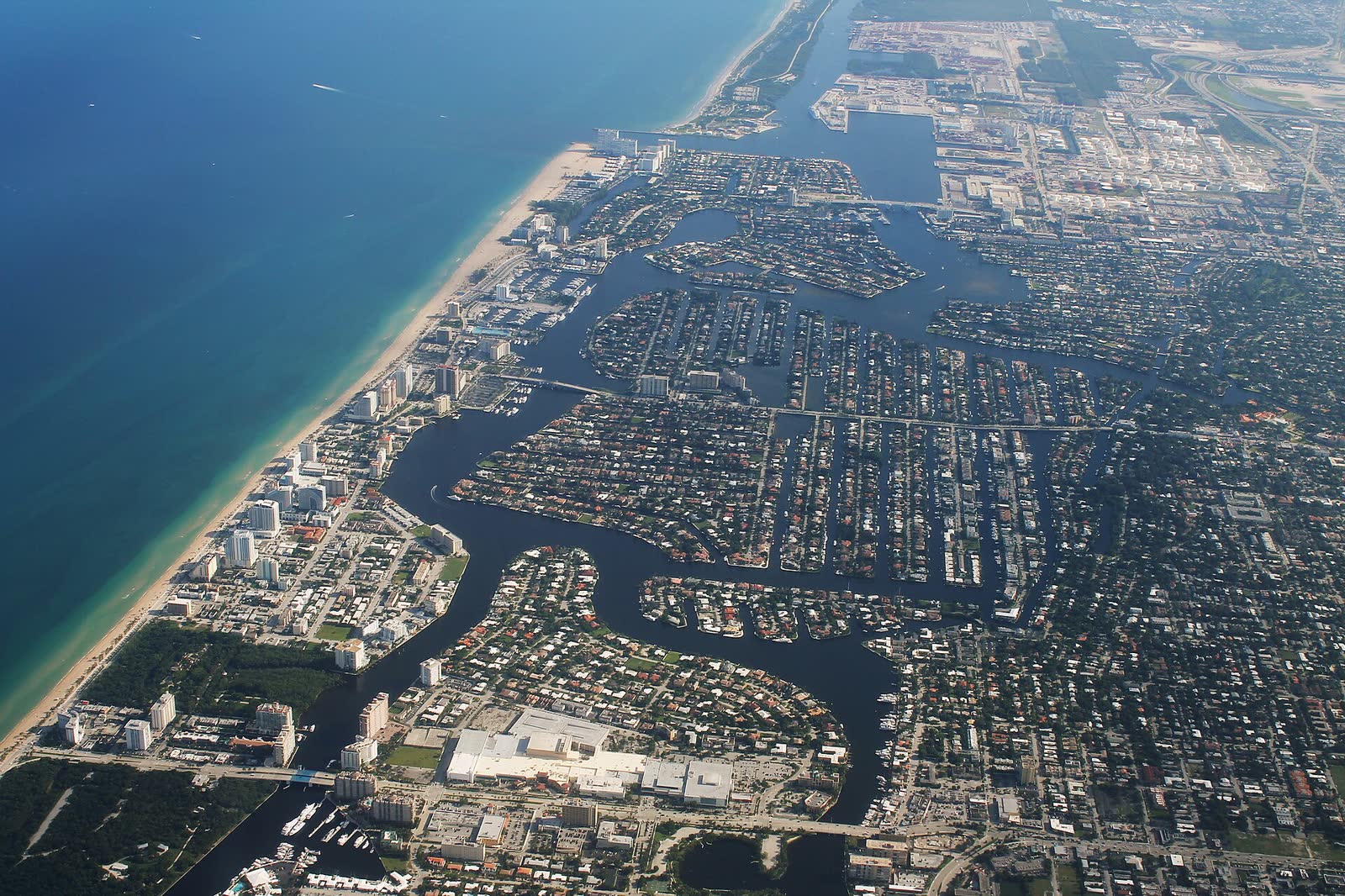
The Venice of America nickname makes sense from a bridge or a boat: the New River, Intracoastal Waterway and residential canals place water inside everyday urban life. Much of the familiar canal landscape was shaped by dredging, filling and waterfront development during the twentieth century. The result supported homes with docks, marinas, boatyards and a large yacht-service economy. It also created practical responsibilities. Bridges affect movement on land and water, seawalls require maintenance, and low-lying neighborhoods face flooding and high-tide concerns. The canals are neither just scenery nor a promise that every waterfront property has the same boating access. They are infrastructure, habitat and a defining part of how Fort Lauderdale works.
- New River
- Intracoastal Waterway
- Canals, marinas and boatyards
Late twentieth century to today
Riverwalk and Las Olas reconnect downtown with its history
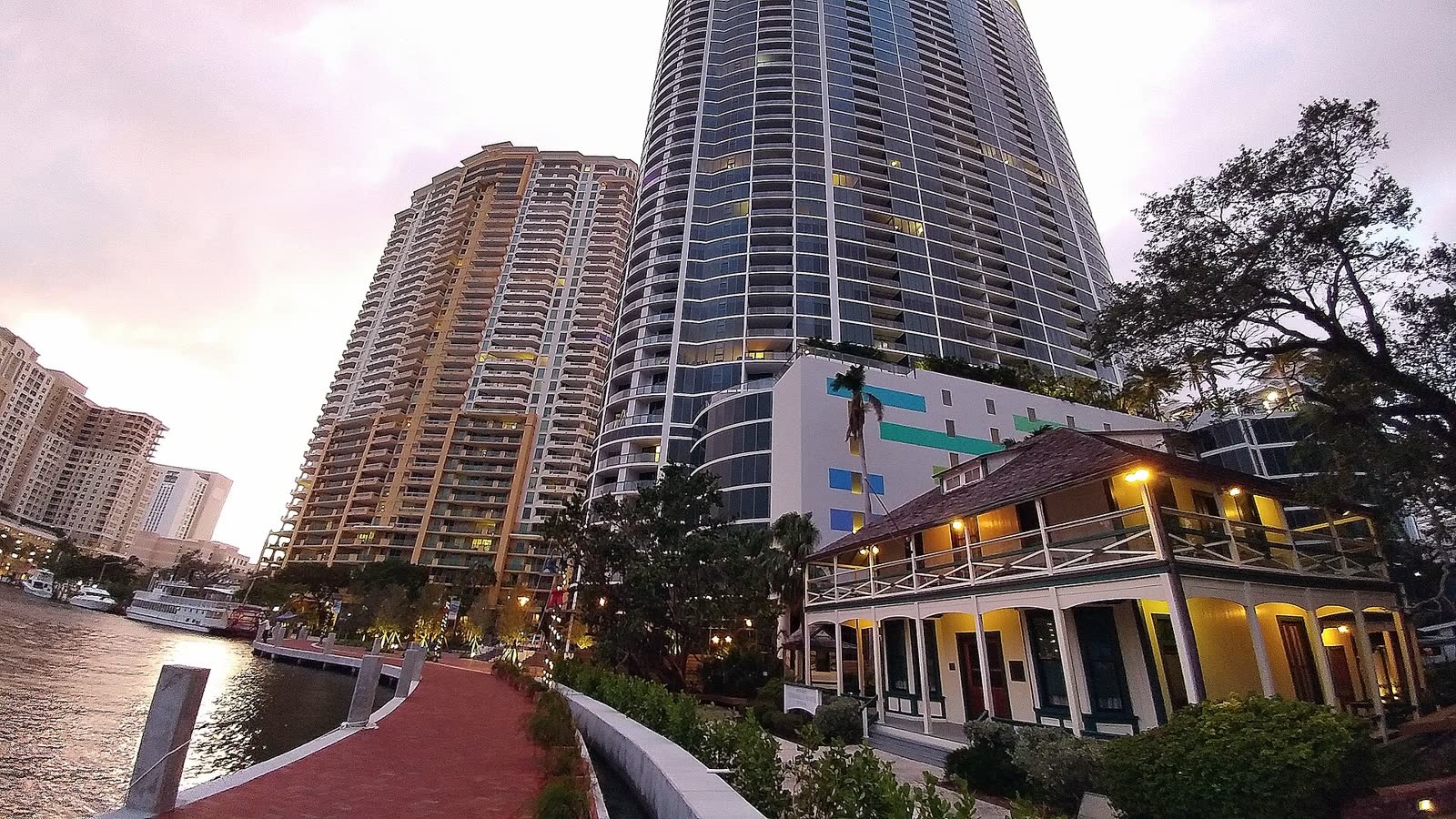
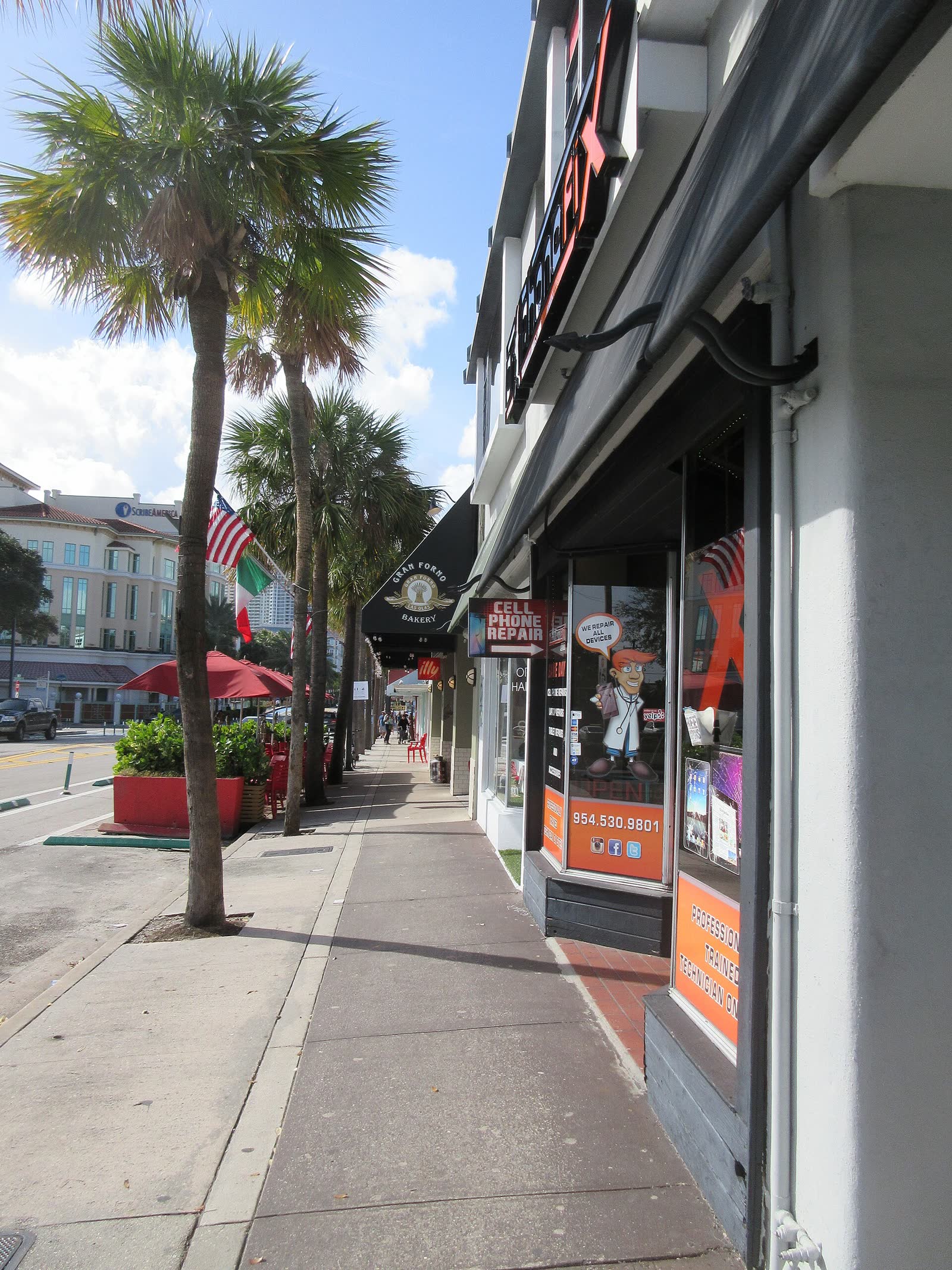
Today's downtown brings several eras into one walk. Riverwalk follows the New River through an arts, science and historic district that includes the Broward Center for the Performing Arts, the Museum of Discovery and Science and History Fort Lauderdale. Stranahan House stands near the eastern end of this downtown riverfront story, beside the commercial district around Las Olas Boulevard. Las Olas connects the downtown experience with shops, restaurants, galleries and the route toward the beach. New towers and marine traffic share the scene with surviving early buildings. The city's history is not sealed off in a museum quarter: it remains visible in the river crossing, the railway, the working boats and the public paths along the water.
- Riverwalk
- Las Olas Boulevard
- Historic buildings beside a changing skyline
Gone or transformed
Important parts of the city's story no longer survive in their original form.
The Second Seminole War forts
1838–1842
The original military posts no longer stand. Their locations and names belong to the history of the Second Seminole War, not to a surviving fort attraction that visitors can enter.
The original Stranahan trading-post operation
begun in 1893
The ferry, stage-line camp and early trading operation have disappeared as working businesses. The surviving 1901 Stranahan House represents a later phase of the same riverside enterprise, not an unchanged 1893 building.
Naval Air Station Fort Lauderdale
1942–1946
The wartime station no longer operates as a naval air base. Its former airfield became part of the region's civilian airport, while the surviving Link Trainer Building houses the NAS Fort Lauderdale Museum.
Places that carry the story
Fort Lauderdale's surviving places tell different stories: a riverside trading enterprise, an early hotel, an artist's coastal estate and a naval training building. Las Olas and Riverwalk connect some of those histories with the living city. Museum interiors have their own admission rules and schedules; public streets and paths are not a substitute for checking access.
Historic Stranahan House Museum
built 1901
The riverside building connects the trading-post era with the early city and the lives of Frank and Ivy Stranahan. Check the museum's current tour schedule before planning an interior visit.
History Fort Lauderdale
historic New River district
The museum campus preserves early buildings near the New River, including the 1905 New River Inn. It is a useful starting point for understanding the settlement beyond the Stranahan story.
Bonnet House Museum & Gardens
begun in 1920
The estate associated with artists Frederic and Evelyn Bartlett preserves a different side of coastal history: a home, art collection and grounds between the ocean and the Intracoastal Waterway. Admission and tour arrangements should be checked directly.
NAS Fort Lauderdale Museum
wartime Link Trainer Building
The surviving naval training building near the airport interprets aviation training, station life and Flight 19. Confirm visiting arrangements with the museum rather than assuming airport-style daily access.
Riverwalk and Las Olas Boulevard
historic riverfront and contemporary public realm
The public paths and streets connect surviving landmarks with present-day downtown. They are places to observe the relationship between the New River, commerce, culture and waterfront development.
Watch: remembering Ivy Stranahan
Local television report
Stranahan House guide remembers accomplished Ivy Stranahan
A guide who knew Ivy Stranahan recalls her civic work and the house where she lived. This is a retrospective interview, not footage of the nineteenth-century settlement.
Historic places, photographed today
The river, the house and the modern waterfront
These are modern photographs, not period postcards. Each image links to its Wikimedia Commons source and identifies its photographer and Creative Commons license.
Present-day view
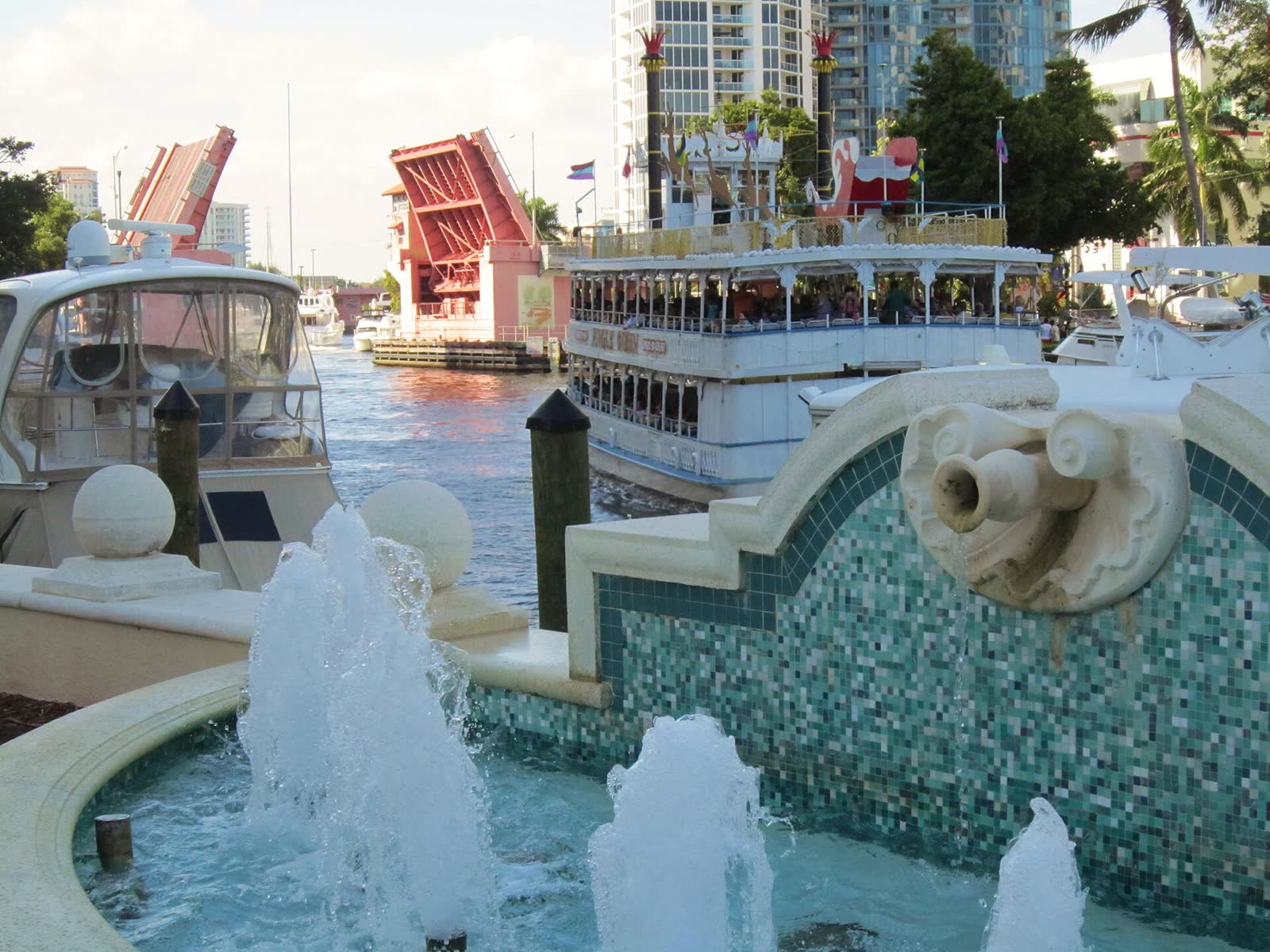
Riverwalk on the New River
A modern riverfront scene, not an archival school photograph. The New River remains the geographical thread connecting the early settlement with downtown today.
Richard Mc Neil / Wikimedia Commons / CC BY 3.0 — view source and license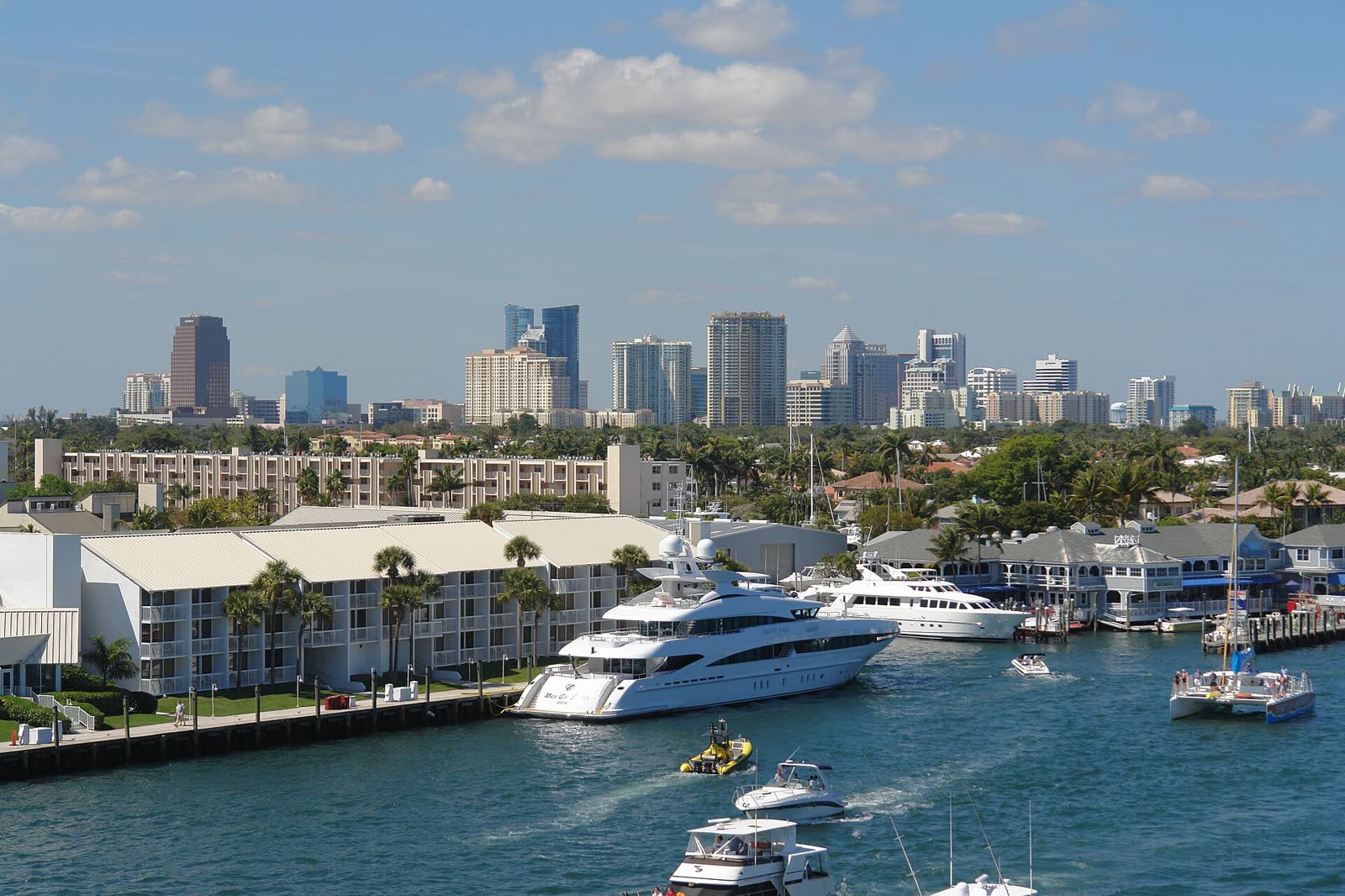
Present-day view
Skyline across the harbor
Fort Lauderdale's skyline seen across the harbor. The photograph illustrates the modern waterfront rather than an early library building.
User:Kolossos / Wikimedia Commons / CC BY-SA 3.0 — view source and license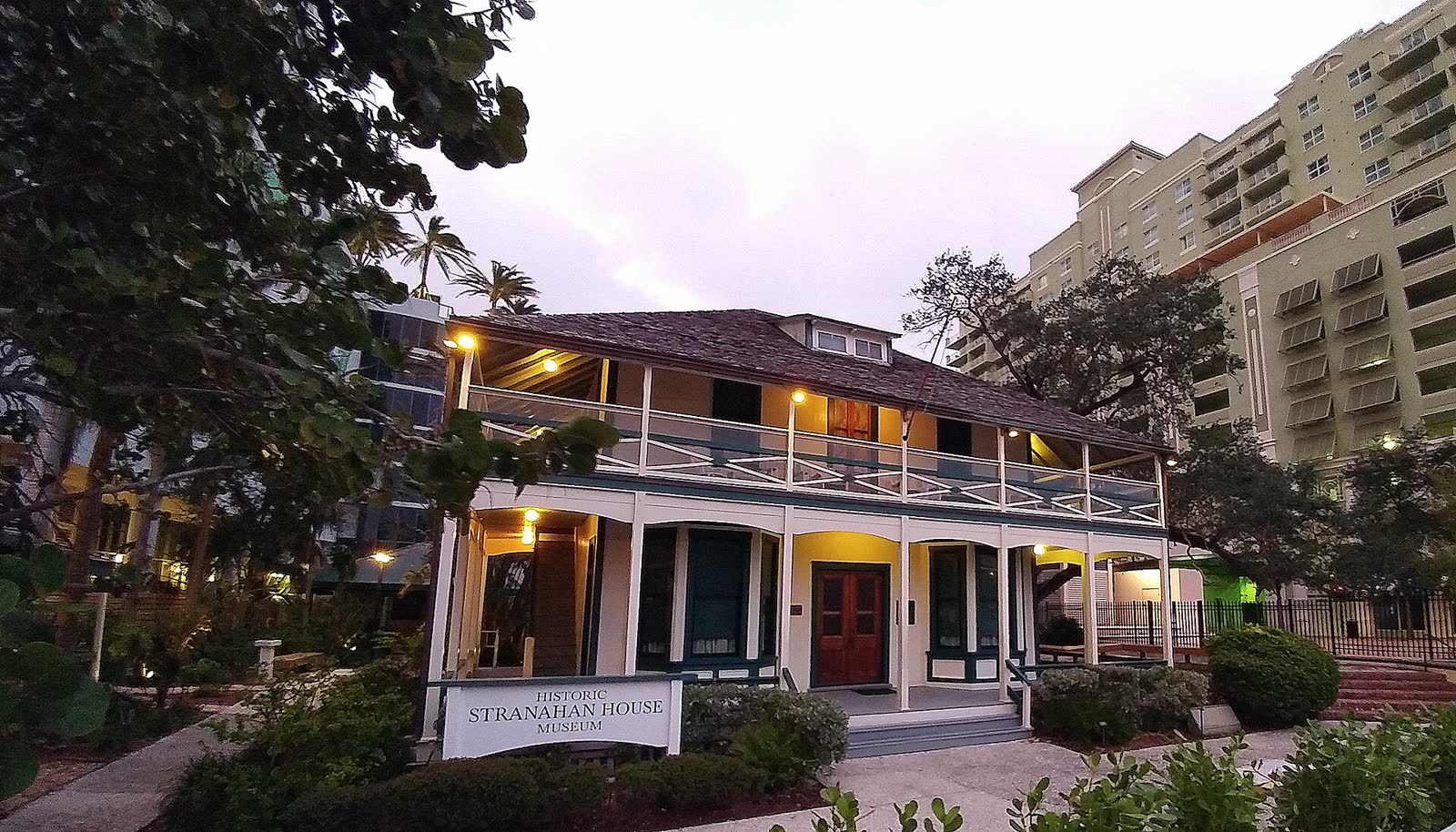
Historic building, modern photograph
Stranahan House beside the New River
The surviving 1901 building associated with Frank and Ivy Stranahan. Its riverside setting helps explain the importance of the ferry crossing and trading business.
Cmasi / Wikimedia Commons / CC BY-SA 4.0 — view source and license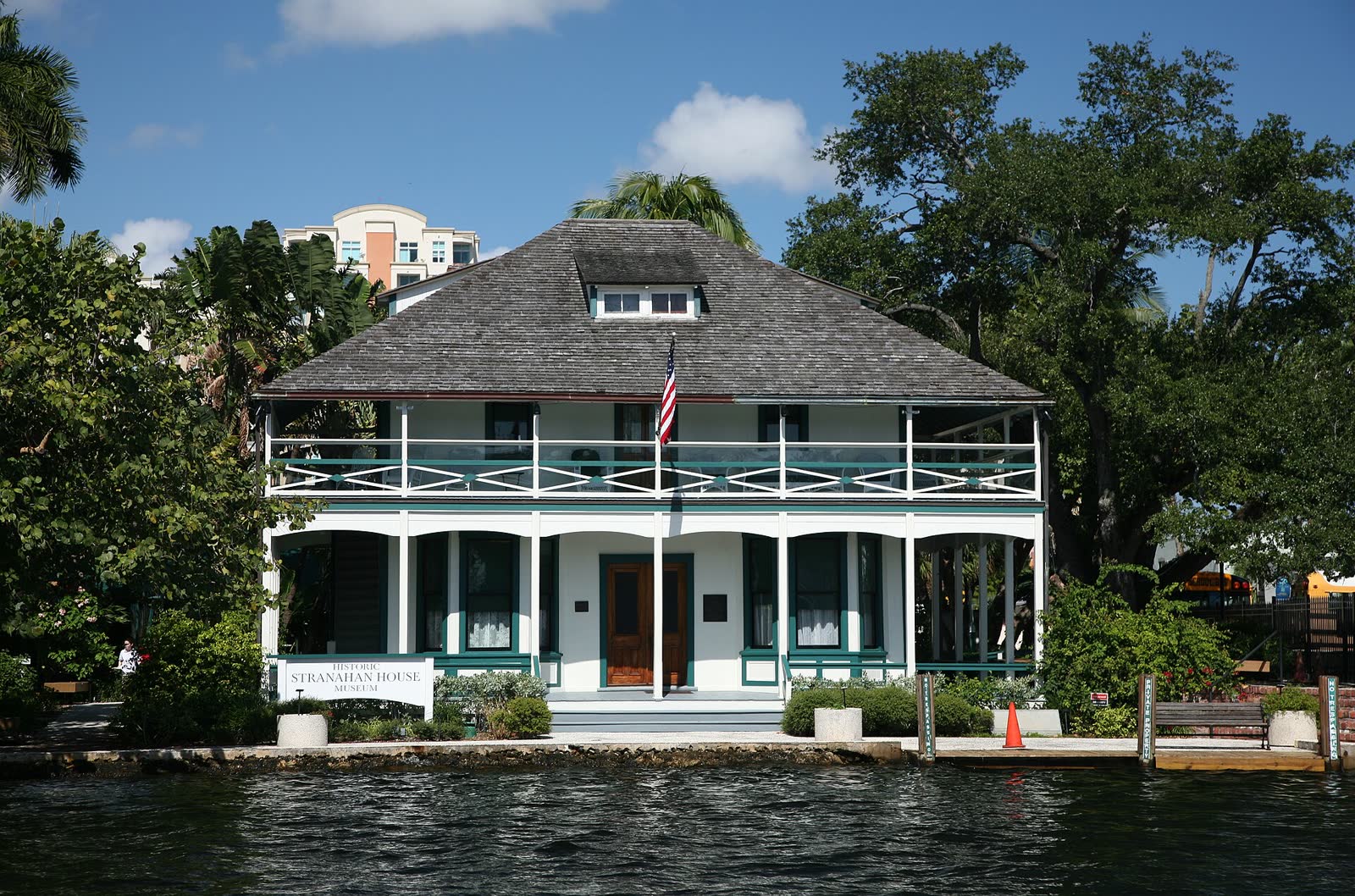
Historic building, modern photograph
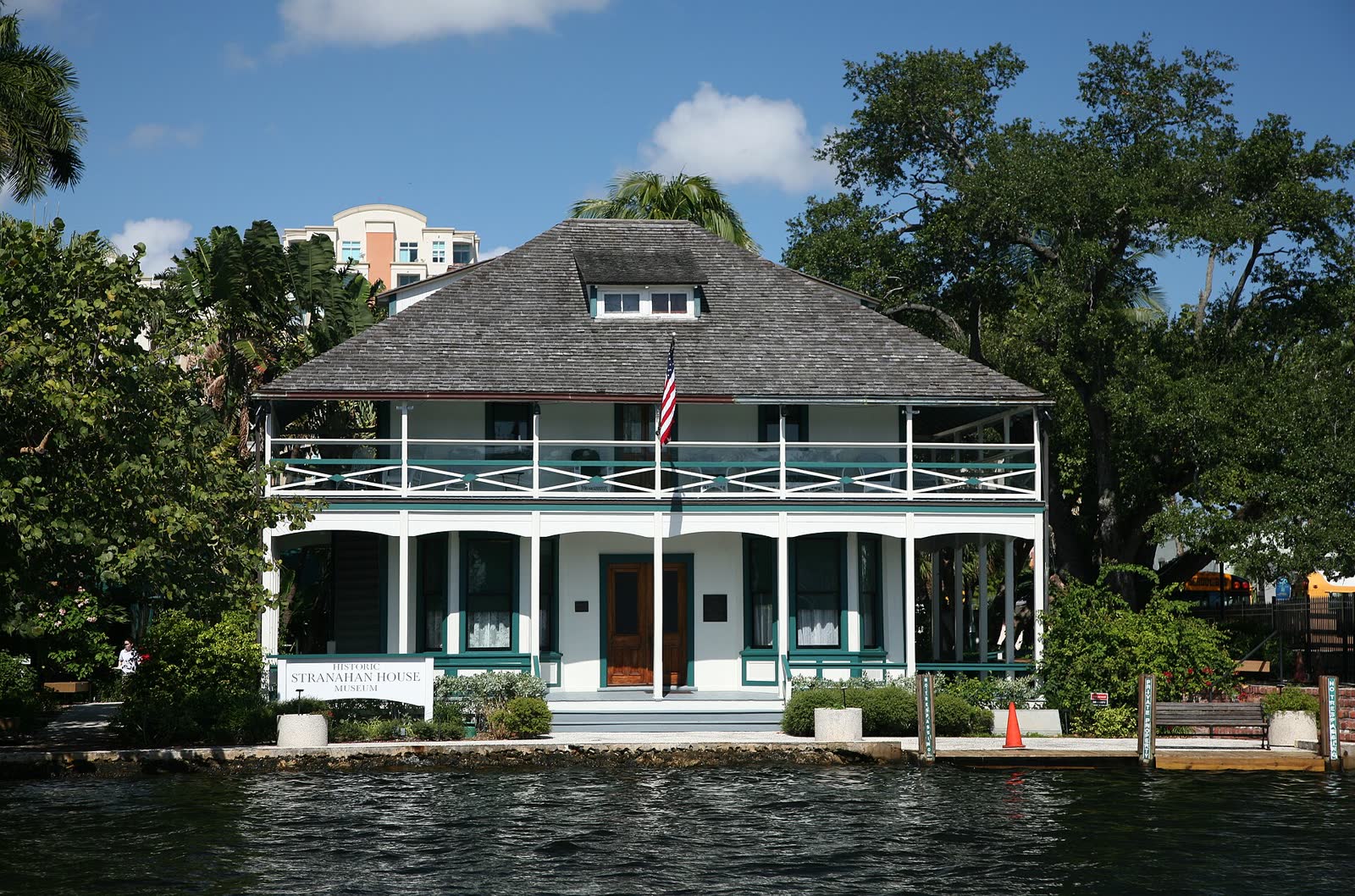
Another view of Stranahan House
A modern photograph of the historic house. The building dates to 1901; Frank's first trading-post operation began in 1893.
Daniel Schwen / Wikimedia Commons / CC BY-SA 4.0 — view source and license
People connected with the early city
Major William Lauderdale
The Tennessee officer for whom the Second Seminole War fortifications were named. His connection explains the city's name, not the founding of its later civilian community.
Frank Stranahan
A ferry operator, trader and businessman who arrived in 1893. His commercial relationships and riverside enterprise were central to the early settlement.
Ivy Cromartie Stranahan
A teacher who arrived in 1899 and married Frank in 1900. Her later work included civic organizing, education, conservation and advocacy concerning Seminole communities.
Henry Flagler
The developer of the Florida East Coast Railway. Its arrival in 1896 linked Fort Lauderdale to the rail network and helped transform the New River settlement.
Explore the city behind the history
Things to do in Fort Lauderdale
Start with the New River, historic museums, Las Olas and the beach.
Get to know the neighborhoods
Downtown, Sailboat Bend, Rio Vista, Victoria Park and the waterfront districts reveal different parts of the city's development.
Read more local stories
Practical guides to exploring Fort Lauderdale and understanding its waterways.